
Once Upon a Time.
You may have entered this letter at a point that isn’t the beginning.
If you landed here directly, please start at the beginning.
. . .
Pay close attention.
What you’re about to read is not a temporary theory, a philosophical curiosity, or a concept to debate casually over drinks.
It isn’t a riddle to solve, nor a comforting bedtime fable.
From this point forward, what you read cannot be undone.
Once this door opens in your mind, it will not close again.
This is not a dramatic revelation designed to flip your world upside down in a single moment.
Truth rarely behaves like fiction.
It tends to be quieter — persistent, steady — yet it has the power to reshape how you see your past, your present, and yes, even your future.
It’s like turning on a light in a dark room.
The furniture doesn’t move, but everything looks different.
You notice details you couldn’t see before.
Proportions change.
Shadows fade.
The room becomes the same — and entirely new.
This shift in perspective may change how you relate to the people in your life, both near and far.
It may give you a new lens through which to understand the motivations, fears, and complexities of those around you.
Small gestures, major decisions, failures, triumphs — everything may take on a new outline, a new meaning.
It’s possible that, at first, you’ll feel doubt.
Your mind — accustomed to familiar patterns and comfortable explanations — may resist the simplicity or audacity of what you’re about to learn.
That reaction is natural.
The mind gravitates toward what it already knows.
But I ask you to continue.
Move past the initial resistance.
Because as you go deeper, something will happen:
you will begin to understand, as I did, the reality of things.
And when that understanding takes root, it may give you a direction you didn’t realize you were missing.
Not an entirely new map, but a recalibrated compass — one that points toward a direction that was always there, quietly waiting for you to notice.
A clarity that may offer a renewed sense of purpose, or at the very least, a new way to interpret the purpose you already hold.
There is a rule that governs us.
A universal law that transcends eras, cultures, and individual beliefs.
This is not a suggestion or a hypothesis.
It is a fact.
A constant so deeply woven into your existence that it is as fundamental as the beating of your heart.
Look closely, because you are living this rule right now.
It is operating in you, through you, and all around you as you read these words.
It is the silent force shaping every one of your seconds.
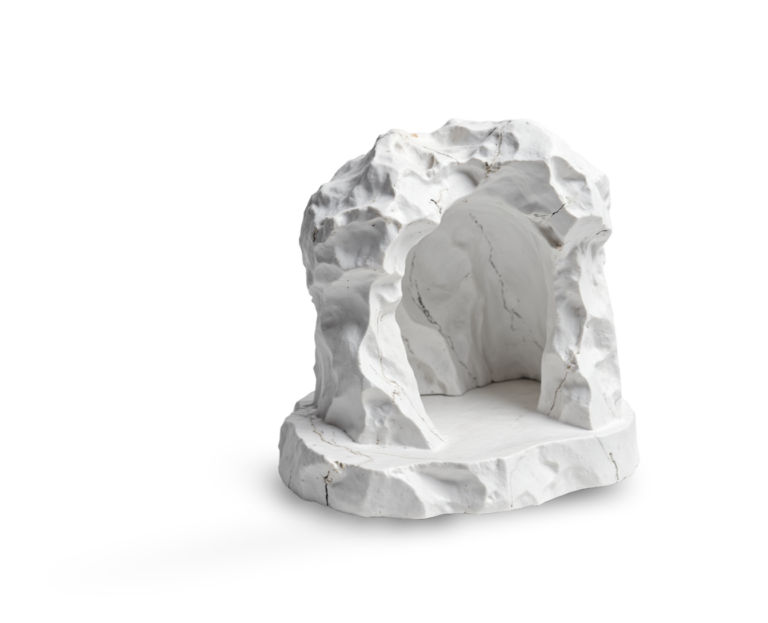
Once upon a time…
— at some undefined point in the vast blur of space and time — there was the first human.
Or, if you prefer, the first small group of humans who took the initial step in the long adventure we now call civilization.
It doesn’t matter whether you are a devoted believer in divine creation, an enthusiast of biological evolution, a student of ancient mythologies, or simply someone who likes to keep an open mind.
Regardless of your belief system, culture, or religion, there is one undeniable point on which we can all agree with crystal clarity:
Humanity began somewhere.
There was a beginning.
A spark.
A moment when consciousness, as we understand it, flickered into being — or when a band of hominids took the first step toward becoming us.
Whichever version of this genesis you prefer, the truth remains: we did not emerge fully formed, clutching smartphones in our hands and drowning in postmodern anxiety.
There was a point zero.
And if we think pragmatically — stripping away our romantic projections and our modern biases — about those first humans on Earth, we might imagine rough, wild beings, untouched by the complexities that define us today.
Yes, they lived differently.
No Wi-Fi.
No late-night food delivery at 3 a.m.
No heated debates about which series to binge.
But at the core of their existence, they were like you. More like you than you might ever imagine.
The first humans were born, lived, and died.
The choreography of life and death was not invented with agriculture or the internet.
It has accompanied us since our very first heartbeat as a species.
Yes, the circumstances were radically different — African savannas, icy tundras, dense forests.
Cultures were rudimentary, grounded in daily survival, oral knowledge, and the strength of small bonded groups.
But from a wide, macroscopic perspective — stripped of historical and social details — they were not so different from us.
The essence of being human, the needs that drive our actions and shape our choices, has remained astonishingly consistent for thousands of years.
They needed the same things we need:
• Shelter
Not an apartment with a city view, perhaps,
but a safe cave, a sturdy tent, a refuge from cold, heat, storms, and predators.
The search for a place to call “home” is as old as humanity itself.
• Food
Hunting, gathering, fishing.
Hunger is a universal motor.
And although today we order pizza through an app, the need to nourish the body for survival is the same as it was for those who hunted mammoths with stone-tipped spears.
• Safety
Protection from wild animals, rival groups, the elements.
Safeguarding life — and the lives of loved ones — has always been a priority.
Today safety might come in the form of laws, healthcare systems, or alarms in our homes,
but the pursuit of well-being and the absence of threat is eternal.
• Family
Whether biological family or extended clan.
The need for social bonds, mutual protection, and a group to identify with is fundamental.
After all, we are social beings by nature.
But why do we want all these things?
Why does it matter so much when we get them right — or when we get everything terribly wrong?
Why are these needs so powerful, so persistent, so defining?
If we use a modern analogy and imagine the human being as a kind of hardware (the body) operated by a software (the brain), then I can tell you this:
There is one simple line of code running it all.
A single line that is the root of everything we are and everything we do.
A truth hidden in plain sight.
Most people never notice it — not because it’s complex, but because it’s obvious.
It has been operating in you since you became someone in your mother’s womb, woven into every choice you’ve ever made, every action you’ve ever taken.
So let me ask you: Are you ready to see it?